5 Reasons Why Cautious Parents Avoid Melatonin for Their Kid's Sleep Trouble
"If only one person reads this and stops giving their kids these hormones, it was worth it"
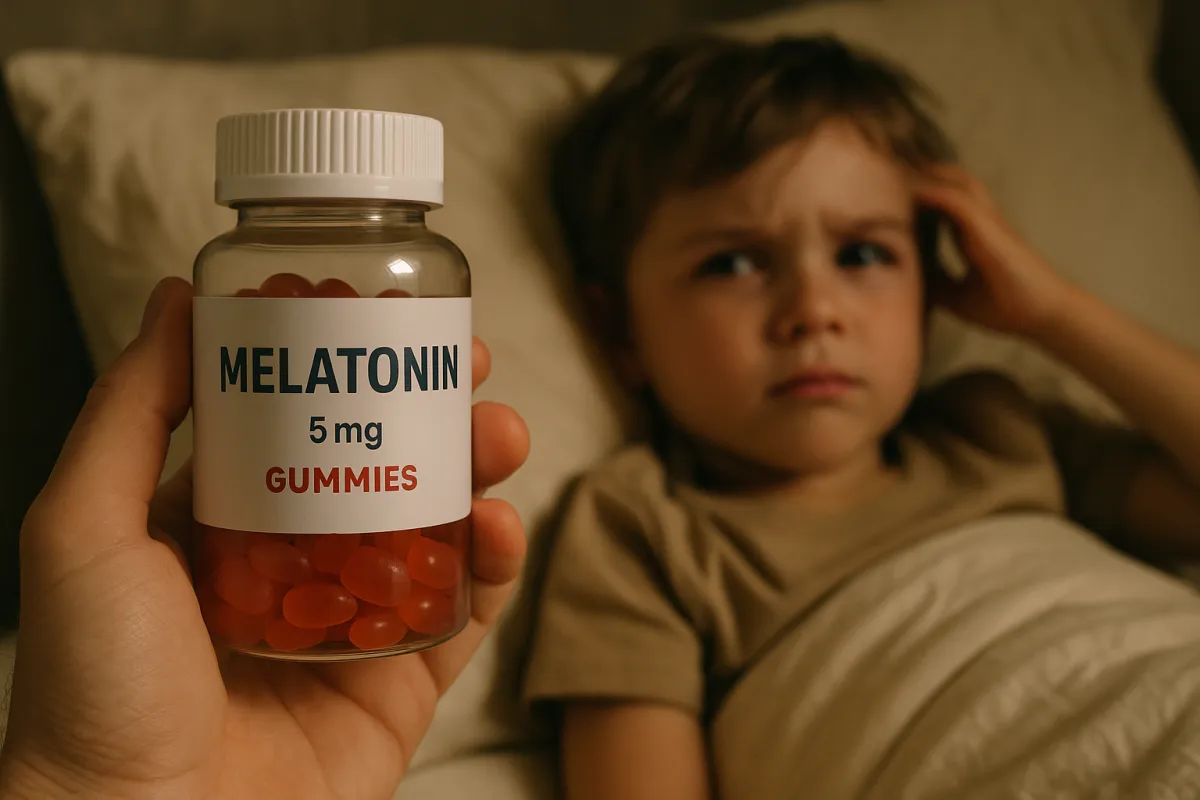
We double-check everything we give our kids—except melatonin.
We read the labels on juice.
We debate screen time.
We stress over BPA in sippy cups.
But when it comes to melatonin, we toss it in the cart like it’s a multivitamin.
No one told us it’s a hormone.
No one mentioned the long-term effects.
No one warned that some parents have trouble getting their kids to sleep without it once they start.
And that’s what makes cautious parents pause—and look closer.
Here are five reasons more families are rethinking melatonin—and the gentler alternative they’re exploring instead.
1. It’s a hormone, not a supplement.
Melatonin isn’t like giving your kid a Flintstones vitamin.
It’s a hormone—one your child’s body already makes on its own. When you give melatonin externally, you risk signaling to the brain, “You don’t need to produce this anymore.”
Short-term use might be fine. But over time, it may impair your child’s natural rhythm and teach their body to expect help instead of building its own ability to unwind and fall asleep.
Cautious parents think long-term.
2. It doesn't fix the root cause —only masks the symptoms.
Melatonin might help your child fall asleep faster. But it doesn’t help them stay asleep. And it definitely doesn’t fix the root issue—like too much screen time before bed, inconsistent routines, or nervous system dysregulation.
It’s like using noise-canceling headphones to “solve” a fire alarm. You might feel better in the moment, but the real problem still needs attention.
Cautious parents solve the root, not just the routine.
3. There’s no regulation on dosage.
In the U.S. and Canada, melatonin is unregulated. Studies show that the actual amount of melatonin in a bottle can vary by up to 465% from what’s listed on the label.
That means your child could be getting much more—or much less—than you think.
Researchers at the American Medical Association found that 22 of 25 products sampled at random – 88% – were inaccurately labeled.
It makes it nearly impossible to know exactly what dosage you're taking or giving your children. Child-resistant packaging is also not required because of the lack of federal regulations. This can lead to overdoses.
A recent study published by Centers for Disease Control and Prevention’s (CDC) highlighted a 420% Uptick in Child ER Visits Due to Melatonin Poisoning.
Cautious parents don’t guess when it comes to hormones.
4. It may create dependency.
If your child learns to associate sleep with melatonin, they may lose confidence in their ability to fall asleep on their own. One rough night becomes two. Then a week. Then a routine.
The body adapts. The expectations settle in.
It’s not just about what goes into the body—but the belief that goes into the mind.
Cautious parents build habits, not dependencies.
Disclaimer:
This content is for informational and educational purposes only. It is not intended to be a substitute for professional medical advice, diagnosis, or treatment. Always seek the advice of your physician or qualified healthcare provider with any questions you may have regarding a medical condition or treatment decision. Do not disregard or delay seeking professional medical advice because of something you have read here.

© 2025 Green Valley Nutrition
PO Box 6245 Charlottesville, VA 22906
1-434-207-8577